
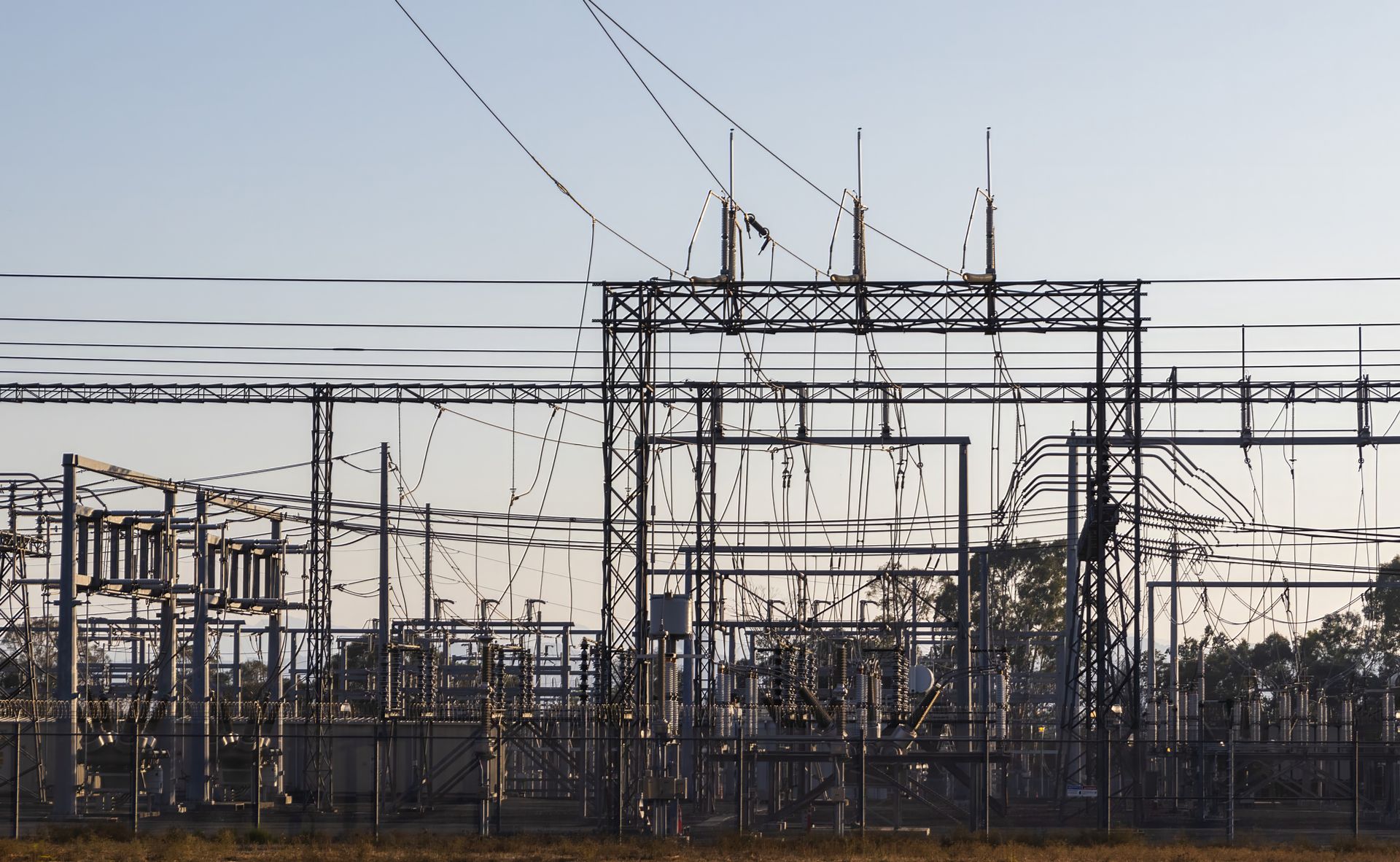
AHFL Energy & Infrastructure Open Architecture
A vendor-agnostic, open-standard architecture spanning high-, medium- and low-voltage distribution, smart grids and industrial automation. All requirements are defined by international standards — no proprietary ecosystems — so procurement, EPC execution and interoperability stay open.
The four-layer open energy architecture
From physical infrastructure to enterprise governance — one interoperable stack.
Layer 4 — Enterprise & global governance
Digital Engagement Model (DEM) · Digital Architecture for Applied Practice (DAAP) · SOC-as-a-Service & SIEM threat monitoring.
Layer 3 — Analytics & intelligence
Physics-informed neural networks (PINN) · AI/ML predictive maintenance & asset health · BIM Level 500 digital twin.
Layer 2 — SCADA, telemetry & substation control
Open SCADA / DMS / DERMS · IEC 61850 station & process bus automation · programmable automation controllers (PAC) and RTUs.
Layer 1 — Physical infrastructure & switchgear
Gas-insulated (GIS) and air-insulated (AIS) switchgear · microprocessor protection relays · inverters, transformer assemblies and BESS · industrial cable protection.
Core functional pillars & technical specifications
Every capability is specified against an open international standard.
1 · Smart grid automation, SCADA & digital substation
- Open SCADA, DMS and DERMS with non-proprietary telemetry: IEC 61850, IEC 60870-5-104, DNP3, Modbus TCP.
- Modular, open-architecture RTUs and PAC/PLCs (IEC 61131-3) with event logging and real-time remote execution.
- BIM (LOD 100–500) integrated with live SCADA telemetry, GIS and predictive physics models.
- Digital protection relays to IEC 60255.
2 · Power distribution, switchgear & renewables
- MV switchgear (AIS/GIS) to IEC 62271-200; LV assemblies to IEC 61439-1/2.
- ACBs, MCCBs, MCBs and RCDs with programmable time-current curves (IEC 60947-2, IEC 60898, IEC 61008/61009).
- Solar PV string/central inverters, DC switch-disconnectors (IEC 60947-3) and Type 1/2/3 SPDs (IEC 61643-11); lightning protection to IEC 62305.
- Battery Energy Storage Systems (BESS) for peak shaving, frequency regulation and microgrid stabilisation.
3 · Industrial automation, motor control & cable protection
- Intelligent Motor Control Centres (IMCC) with electronic overload relays, soft starters and low-harmonic VFDs.
- Open fieldbus and Ethernet: OPC-UA, PROFINET, EtherNet/IP, Modbus TCP.
- Heavy-duty conduit and cable-entry systems rated IP66/IP67/IP68 per IEC 61386.
4 · Cyber-physical security & SIEM/SOC
- ICS/OT security with Zero-Trust network architecture, segmentation and deep packet inspection.
- Centralised log aggregation, correlation and 24/7 SOC monitoring.
- Aligned to ISO/IEC 27001, NIST CSF and national cybersecurity regulations.
Vendor-neutral interoperability matrix
Requirements are aligned to open standards rather than proprietary ecosystems.
| Functional category | Open standard | Vendor-neutral capability |
|---|---|---|
| Grid automation & SCADA | IEC 61850 · DNP3 · IEC 60870-5-104 | Real-time substation automation, dynamic topology, automated load shedding |
| Protection relays | IEC 60255 | Digital overcurrent, differential, distance and arc-fault protection |
| Programmable controllers | IEC 61131-3 | Open PAC/PLC supporting LD, ST and FBD |
| Intelligent motor management | OPC-UA · PROFINET · Modbus | Predictive thermal modelling and Type-2 coordination |
| Building & lighting automation | KNX (ISO/IEC 14543) · DALI-2 | Open lighting control, energy management and GRMS |
| Energy management software | ISO 50001 · REST APIs · JSON-LD | Cloud/edge power monitoring, sub-metering and power-quality logging |
Phased implementation — three horizons, ten steps
Horizon 1 · M0–M18
Grid automation core
Open SCADA/DERMS and digital substation templates, BIM/LOD 100–500 design libraries, pilot labs and initial DAAP microcredential cohorts.
Horizon 2 · M18–M36
Field deployments
Regional corridor deployments (UAE, India, Canada, Netherlands), AI/ML predictive maintenance and digital twin commercialisation, Industry 4.0/5.0 integration.
Horizon 3 · M36–M60
Global scale
eMobility and Intelligent Transport Systems, satellite telemetry for grid and weather modelling, full multi-country scale across the global corridors.
The 10-step implementation workflow
The energy vertical runs a standardised sequence in every regional hub.
- 1 · Days 0–30
Partner engagement & needs assessment; non-exclusive MOUs with universities and industry.
- 2 · Days 31–120
Pilot lab setup (power distribution, solar PV, motor-control benches); onboard 20–30 apprentices.
- 3 · Days 121–270
Advanced lab (SCADA simulators, smart-grid hardware, AI predictive maintenance); apply for grants.
- 4 · Days 271–540
Regional accreditation (EQF, NSDC/AICTE, CAA/KHDA).
- 5 · Days 541–1080
Multi-sector integration: smart buildings, data centres, water/wastewater, eMobility.
- 6 · Days 1081–1260
Cross-border interoperability via DAAP verifiable credentials.
- 7 · Days 1261–1440
Global node replication across India, UAE, Canada, Brazil and Singapore.
- 8 · Days 1441–1620
Policy leadership in IEC/IEEE/ISO working groups.
- 9 · Days 1621–1800
ESG and circular-economy integration: LCA tracking, battery/equipment recycling.
- 10 · Day 1801+
Permanent institutionalisation with self-sustaining learning and innovation centres.
End-to-end execution workflow
A structured, governed process from first contact to delivery and lifecycle management.
Stage 1
Lead management
Open / contacted — capture and qualify demand.
Stage 2
Opportunity management
Prospecting / bidding with stage gates.
Stage 3
Quotation management
Configuration and pricing.
Stage 4
Order execution & invoicing
Logistic delivery, O&M and lifecycle management.
Account tiering
- Strategic
- Major
- Macro
- Emerging
Tiers drive resource allocation, dedicated account teams and tailored service delivery.
Delivery model · 70–20–10
- 70% hands-on field practice and project incubation
- 20% digital learning (adaptive VARK-customised AI modules)
- 10% direct expert mentorship
Ecosystem roles — the four covenants
- Sahadharmacharis — strategic partners
- Jnana Mitras — subject matter experts
- Karma Sevakas — execution specialists
- Shraddha Bandhus — affiliates & subscribers
Reference library
Source specifications and reference research behind the architecture.
Members pack
The reference pack is confidential and is not published here. Approved members and administrators can request the documents from administrator@hfl-pass.com.
Locked · members only
Energy & infrastructure reference library
The architecture, account-management and reference documents are part of membership.
Unlock with membershipBuild the energy transition with open standards
EPC and system-integration partnerships, lab accreditation and workforce programmes — scoped to your corridors and grid codes.
